That beautiful jasmine plant in your yard might be hiding a slithery secret. While it smells amazing and adds charm to your garden, it could also be inviting unwelcome guests—snakes. Before you brush off that rustle in the bushes, here’s what you need to know about how one popular plant might turn your peaceful yard into a snake playground.
Why jasmine plants attract snakes
Jasmine isn’t a “snake magnet” in the magical sense. It doesn’t attract them with scent or color. But it does offer everything a snake needs in summer: shade, cover, and food. That mix makes it the perfect hangout spot.
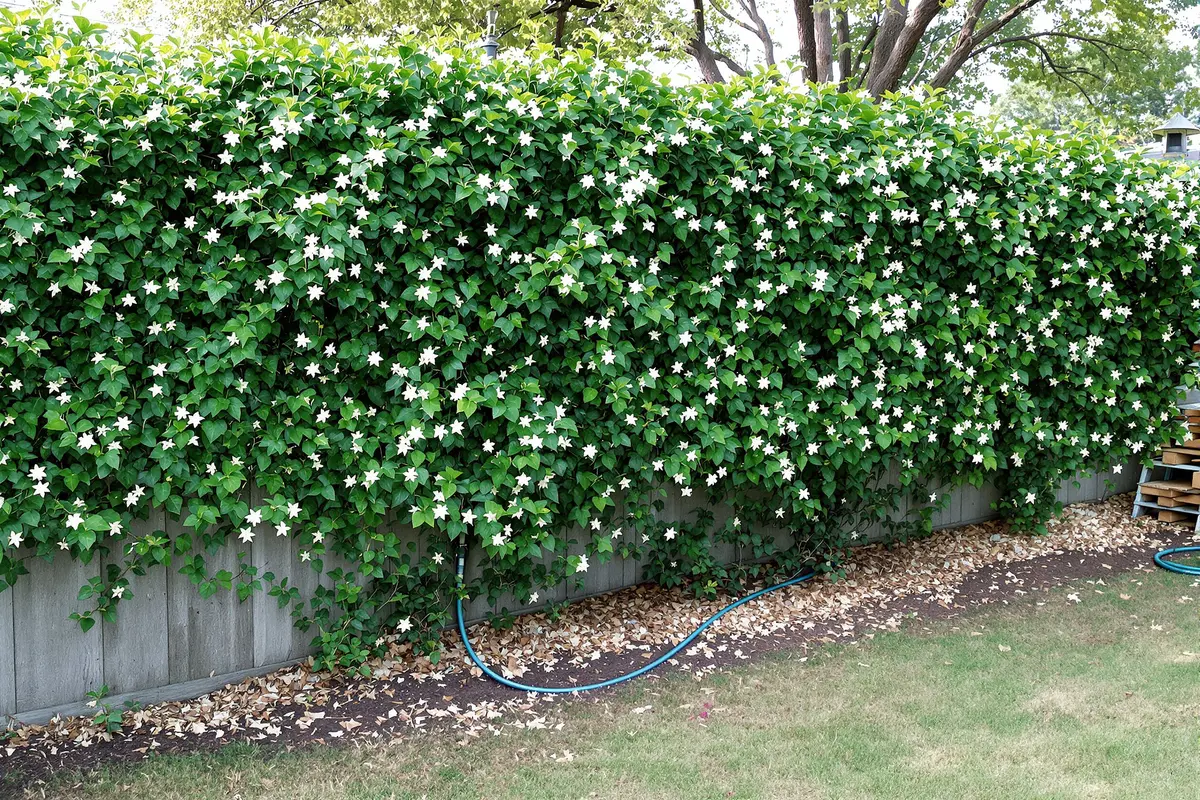
Dense, evergreen types like Confederate jasmine or star jasmine grow in thick layers and form tangled masses. These vines often climb fences, railings, and walls—places snakes feel safe moving along. The leaves create a hidden tunnel that protects them from predators and from you spotting them.
What actually draws snakes to your garden
Snakes don’t wander the yard looking for flowers. They follow shade, prey, and structure. Jasmine plants provide all three.
- Shade: The thick foliage stays cool even on the hottest days.
- Prey: Rodents, frogs, and lizards are drawn to flowers and dropped seeds.
- Structure: vines and ground-level mats give snakes tunnels and escape routes.
Set a bird feeder nearby or leave a hose dripping, and the area becomes a buffet line—snakes just follow the food chain.
How jasmine changes your landscape
Imagine your side yard: a narrow path, fence to one side, and jasmine climbing along it. Underneath the plant, leaves pile up, petals fall, and moisture lingers. It smells lovely. But it hides everything.
Over time, that shady corner becomes a snake highway. Rodents nibble on dropped bird seed. Frogs stay close to the damp soil. Snakes follow close behind, staying out of sight.
Simple ways to make your garden less inviting to snakes
Don’t worry—you don’t have to rip out all your plants. Just tweak how and where jasmine is planted, and you can enjoy your garden without inviting unwanted wildlife.
- Avoid placing dense vines right next to doors, steps, or play areas.
- Use a trellis to raise the plant, and keep the lower 30–40 cm open.
- Choose lighter plants like lavender, salvia, echinacea, or ornamental grasses near high-traffic areas.
- Clean the shrub base regularly—remove dead leaves, branches, and mulch buildup.
- Move wood or rock piles at least a few feet away from dense greenery.
- Don’t overwater during heat waves—standing moisture increases frogs and insects.
Common mistakes that encourage snakes
Many gardeners don’t realize they’re creating cozy spots for snakes. Here are a few habits to watch out for:
- Letting jasmine grow unchecked into a massive green wall
- Stacking wood, pallets, or metal sheets nearby “for later”
- Leaving mulch bags half-full beside vines
- Watering heavily at the base of shrubs in hot weather
Each one of these alone isn’t too bad. But together, they create a maze that’s tailor-made for a snake’s needs.
Expert advice on keeping snakes away
Wildlife experts don’t blame jasmine exclusively. They look at the overall design—the “edge habitats” where dense plants meet walls or shady corners. These patterns are what really matter.
“Snakes don’t like being exposed,” one wildlife technician explained. “They follow the safest route—usually the one you accidentally built by combining cover and prey.”
That’s why jasmine stands out: it forms cover so easily, grows quickly, and smells fantastic. So we let it stay. But without pruning or planning, it becomes an ideal snake route.
Rethinking a “safe” summer garden
Once you know that vines can become snake corridors, you start to see your yard differently. That soft curtain of green? It might also be a road. That inviting shaded corner? A wildlife hideout.
The goal isn’t to sterilize your yard—it’s to shift snake-friendly zones away from the areas you use. Choose sun-loving, open plants near patios. Trim and tidy under your shrubs. That way, your lush garden stays beautiful without compromising safety.
Quick FAQ
- Does jasmine attract snakes?
Not directly. But it creates the perfect mix of shade, cover, and food, which draws them in. - Should I remove all jasmine?
Not always. Just keep it pruned, raised, and away from doors and footpaths. - Are some types worse?
Yes—dense, evergreen kinds like Confederate jasmine are harder to manage than lighter, airy varieties. - Better plants for safer areas?
Lavender, salvia, rosemary, coreopsis, ornamental grasses—these don’t form thick ground-level cover. - What else brings snakes close?
Wood piles, tall ground cover, puddles, and places with lots of rodents or frogs.
Final takeaway
Lovely as it looks, jasmine can change the balance in your backyard. With just a few simple layout choices—thinning stems, raising vines, picking different companion plants—you can keep beauty and lose the risk.
Your garden should feel like a retreat, not a surprise. Once you see things through a snake’s eyes, you’re in control again.