Can building a dam really nudge the Earth off balance? China’s latest energy megaproject might not just shift where power flows—it could, quite literally, shift the planet itself. Welcome to a new era where technology, ambition, and nature collide at a scale hard to imagine.
The Three Gorges Dam: More Than a Giant Wall
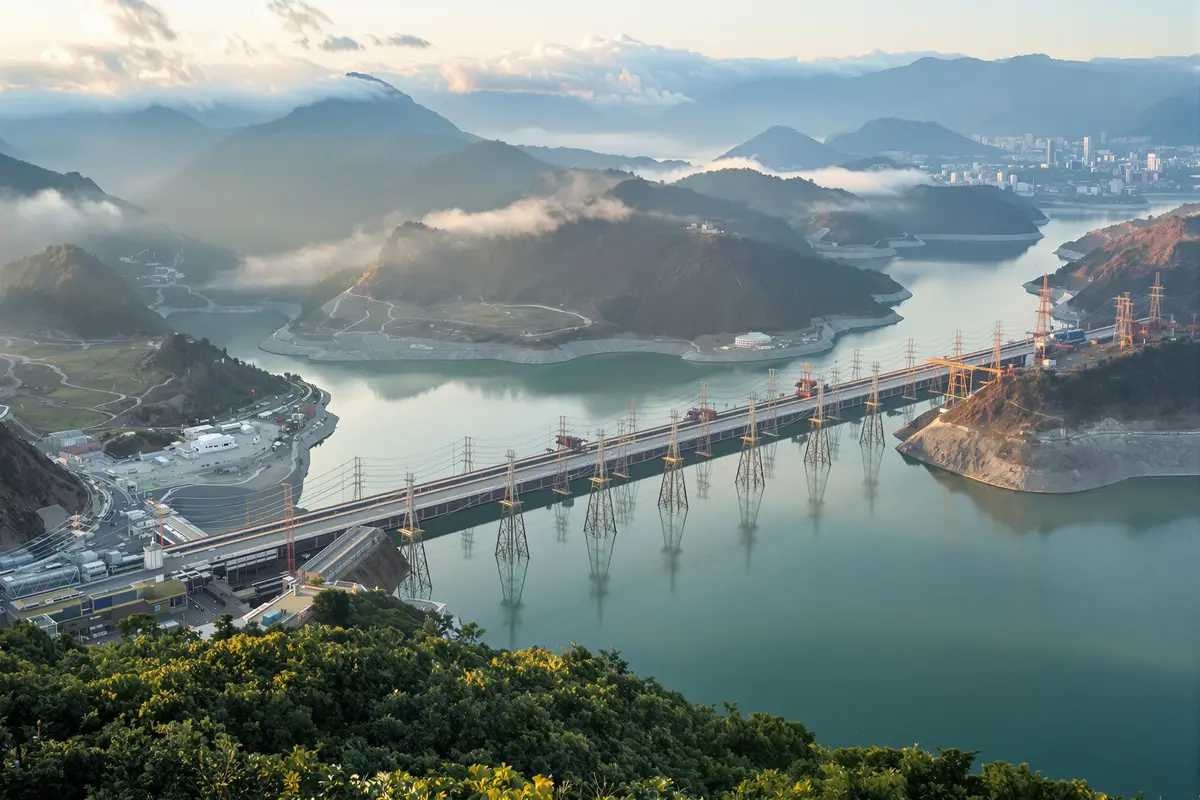
You’ve probably heard of the Three Gorges Dam. It’s the biggest hydroelectric station in the world, generating 22.5 gigawatts of power. That’s enough to power entire cities. But the most mind-blowing part? Filling its reservoir actually slowed Earth’s rotation—just a tiny bit, but enough to measure.
The dam sits on the Yangtze River. Behind it, over a million people were relocated. Villages were flooded. Ancient sites disappeared. All for the sake of progress—and power.
A New Chapter in China’s Energy Ambitions
Now, China’s moving beyond that “first chapter.” The focus has shifted west, into rugged valleys and remote plateaus, where new mega-dams are rising: Baihetan, Wudongde, and others.
Together, they’re part of a massive national grid. But this isn’t just any grid—it’s built around ultra-high-voltage (UHV) lines that stretch across thousands of kilometers. Electricity generated in remote mountains now races to power the lights in Shanghai, charge smartphones, and run subway systems hundreds of miles away.
What Makes These Projects Different?
Unlike the standalone nature of past dams, this next generation is designed as a system. Here’s what sets it apart:
- UHV Power Lines: Transmit electricity at up to 1100 kilovolts with minimal loss
- Integration: Linked with solar and wind farms to balance supply
- Reach: Delivers clean energy from western China to eastern industrial hubs
- Scale: Designed as a national ecosystem for energy—not just a local solution
From Mountains to Malls: A Power Shift You Can’t See
It’s easy to forget where energy comes from. But when someone pays for street food in a city lit by distant hydro dams, a silent connection is at work. One small tap, powered by thousands of kilometers of buried effort.
This invisible thread—UHV lines connecting wind farms, solar panels, and hydro turbines—is the real revolution. It’s reshaping how China, and possibly the world, thinks about electricity.
A Cleaner Future with Complicated Costs
Clean energy sounds great. But every dam built changes something forever. People lose homes. Rivers change behavior. Fisheries vanish. Some residents see new jobs and housing. Others feel displaced and forgotten.
China knows this. That’s why recent efforts include stricter studies and talks about “ecological corridors” to let some parts of nature stay untouched. Whether that works? Time will tell.
Questions with No Easy Answers
These projects bring up tough questions. Like:
- Can we control nature at this scale safely?
- Is displacing thousands of people worth a cleaner grid?
- Will other countries follow China’s path?
The answers aren’t simple. Large dams reduce fossil fuel burning, yes. But they also harm ecosystems and sometimes release methane from reservoirs. Every gain comes with a trade-off.
How Much Power Should One Nation Hold?
This megaproject isn’t just about watts and wires. It’s about influence. If China’s model works, it may become a blueprint around the world. If it fails, it’s a lesson in overreach.
The world’s watching. Will this vast electric web become the future of sustainable energy—or a warning sign of what happens when we try too hard to bend nature to our will?
The Bigger Picture Behind the Plug
Next time you charge your phone or flip on a light, think about where that energy came from. Maybe it rushed down from a river high in the Tibetan Plateau. Maybe it floated in from wind farms hundreds of miles away.
What China is building is massive. It’s engineering not just infrastructure, but a new relationship between people, place, and power. That matters—even if all you see is a glowing screen.
Quick Facts About China’s Energy Megaproject
- Three Gorges Dam: Generates 22.5 GW, enough to shift Earth’s rotational speed slightly
- New Dams: Baihetan, Wudongde rival Three Gorges in capacity
- Power Lines: Use ultra-high-voltage tech (800-1100 kV) to move energy with minimal loss
- Energy Strategy: Western China supplies, Eastern China consumes
- Controversy: Environmental disruption and large-scale human resettlement
Still Curious?
Can a dam really slow Earth’s rotation? Yes—barely. It works like a spinning figure skater moving mass closer to or farther from the center of spin.
Is China’s new hydropower system better than Three Gorges? It’s more interconnected, combining renewables into a smarter national grid.
Is it good for the climate? It can be. Less coal is better, but large dams also have environmental costs that aren’t always visible.
What about the people displaced? Some get new homes and jobs. But many lose deep community roots and family land. It’s complicated.
Can other countries copy this system? Technically, yes. But politically and socially? Few nations can move at this scale or speed.
China’s megaprojects are more than engineering feats. They’re signals—of ambition, cost, and the tangled choices ahead as our planet seeks cleaner power.