
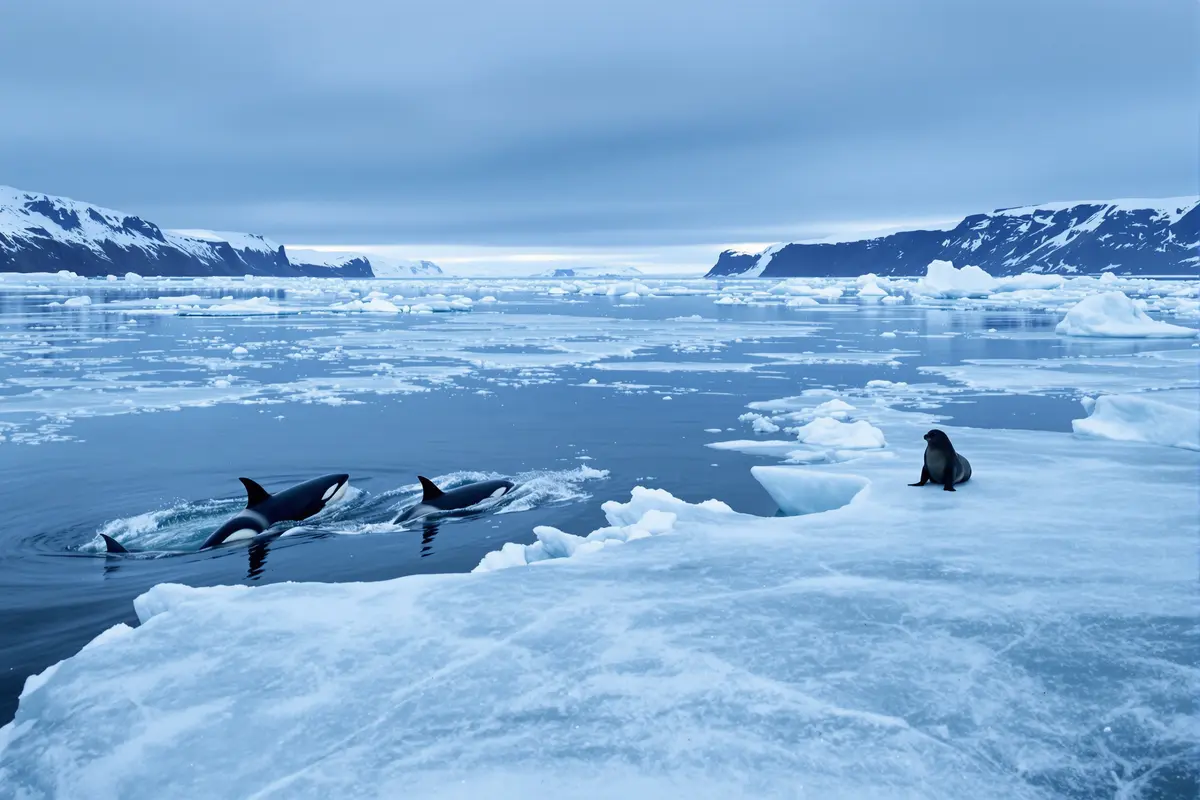
The ice cracks like a rifle shot. In the shifting silence of Greenland’s summer coast, orcas rise and slam into fragile floes, toppling seals into icy water. This isn’t a wildlife documentary—it’s the new Arctic in motion. And while scientists sound the alarm, Greenland’s response remains worryingly slow. The climate has changed. The ice is thinner. Orcas are rewriting survival rules right in front of us.
Orcas are mastering collapsing ice as hunting tools
In fjords like Disko Bay, something startling is happening. Groups of orcas, once considered rare visitors to the area, now patrol the coastlines regularly. Their method? Spot seals resting on small ice floes, then charge in formation to create waves that flip the ice and toss the seals into the sea. It’s fast, efficient, and shockingly coordinated.
Just over a decade ago, thick pack ice gave seals stable resting platforms. Now, earlier thawing and warmer seas are turning that once-safe ice into paper-thin traps. The animals haven’t had time to adapt. Orcas, on the other hand, have wasted no time filling that gap.
This shift isn’t just impressive behavior—it’s physics meeting hunger. Melting sea ice opens new paths for orcas that used to be blocked. They’re reading the water like a map. And every year, that map grows.
Scientists raise the alarm—but Greenland hesitates
Experts have been warning coastal communities for years now. They show heat maps, track GPS-tagged orcas, and explain how the predators are moving into new territories. But in local town halls, those warnings are often met with quiet resignation.
Why the disconnect? For many, it’s not denial. It’s survival fatigue. These communities have already lived through major changes—snowmobiles replacing dog teams, global markets reshaping diets, and young people leaving for Danish cities. Another shift, even a dramatic one, feels less like a crisis and more like one more thing to absorb.
There’s also a hard truth: open water isn’t just risk—it’s opportunity. Longer fishing seasons, easier trawling routes, and potential new shipping lanes all bring economic hopes. So while researchers talk about orcas ruining the balance, some locals quietly see boats full of halibut and shrimp.
A different way forward is still possible
This situation doesn’t have to end in collapse. In fact, some promising steps are already underway. A few younger fishers are tagging orca videos with GPS locations, sending voice notes to scientists, and creating informal networks of coastal observers.
Imagine scaling this small act: regional programs where citizens regularly log orca and ice sightings, align those with satellite data, and help researchers stay ahead of shifting patterns. It’s low-cost, fast, and rooted in real lived experience.
Other small, practical steps could make a big difference too:
- Shorter review cycles for managing fishing zones when orcas cluster in sensitive areas.
- Seasonal closures near seal calving grounds to avoid added stress on vulnerable pups.
- Support for rerouting boats away from whale hotspots during critical times.
These changes aren’t about shutting down industries. As one marine biologist said, “We’re not saying stop hunting. We’re saying: pay attention to who’s sharing this ice with you now.”
Why this matters—now more than ever
There’s a danger in waiting. Every season, orcas get smarter, seals become more exposed, and humans adjust a little later than needed. Reports pile up, but the ice doesn’t pause for another meeting.
Out on the water, it’s already happening. In the blue dusk of Arctic twilight, you can watch orcas trace coastlines that didn’t exist a generation ago. Their silhouettes follow invisible contours—we just haven’t updated the map yet. But the whales have.
This moment isn’t about choosing between science and tradition. It’s about realizing that the old rules aren’t coming back. Greenland stands on the edge of something sharp, fragile, and real. The next shift won’t wait.
FAQ
Are orcas in Greenland really hunting on collapsing ice, or is this exaggerated?
It’s real and documented. Researchers in areas like Disko Bay have filmed orcas coordinating waves to break thin floes and knock seals into the water. These behaviors used to be rare but are now frequent.
Why are orcas appearing more often around Greenland now?
Warming waters and earlier ice melt have opened new pathways and hunting grounds. Orcas can now access parts of the Arctic coast that were previously too ice-covered for much of the year.
How does this affect traditional seal and whale hunting by Inuit communities?
Local hunters are seeing fewer seals in familiar spots and new patterns of migration. In some areas, orcas may be displacing seals and narwhals, disrupting long-standing seasonal schedules.
What are researchers asking Greenland’s authorities to do differently?
Scientists want more adaptive, flexible management—like updated fishing zones, citizen science programs, and more direct collaboration with local residents to track orca behavior and ice change.
Can individual travelers or readers do anything meaningful about this situation?
Yes. Support organizations involved in Arctic climate research and thoughtful local policy. Share stories responsibly, and when visiting, respect wildlife zones and listen to guides with local knowledge.