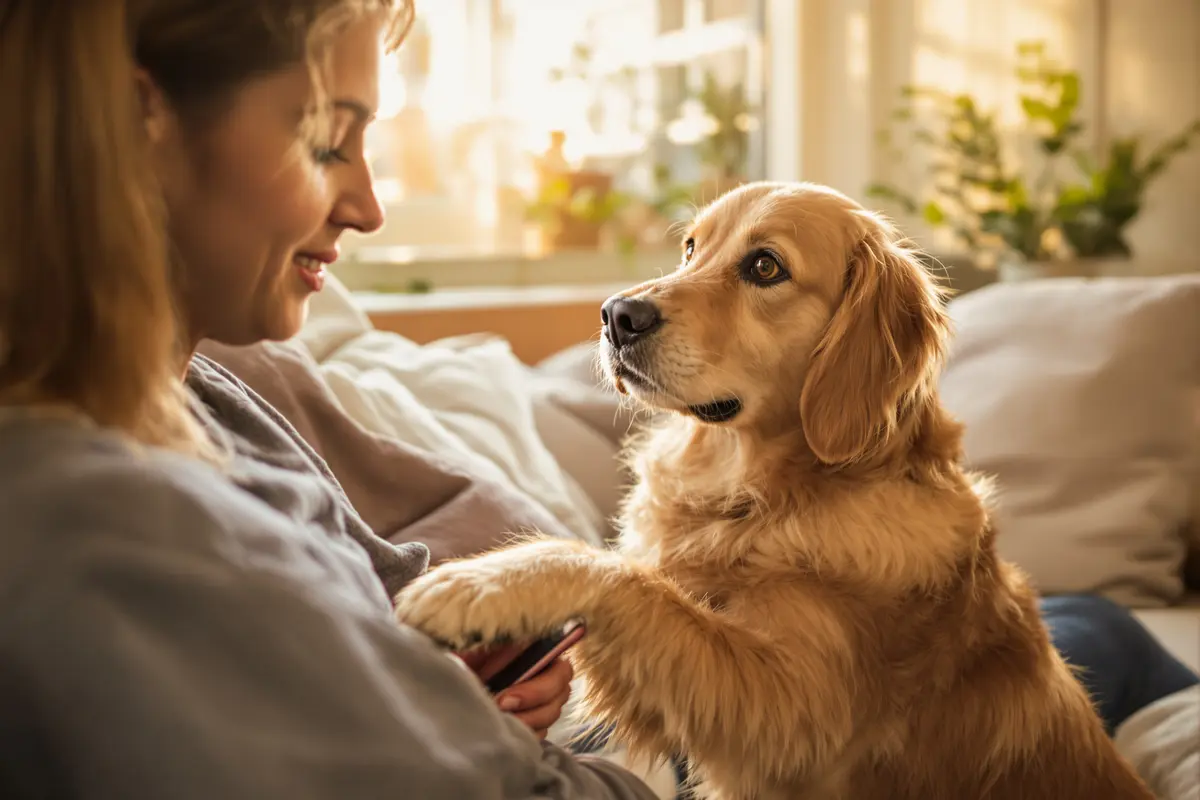
You’re sitting on the couch, maybe watching TV or scrolling your phone, and suddenly—there it is. A warm paw pressing lightly against your arm or leg. Your dog’s eyes meet yours. It feels sweet. Harmless. But could there be more behind that seemingly innocent gesture?
It’s Not Just Cute—It’s Communication
When your dog gives you its paw, it may look like a request for a belly rub or a playful hello. But experts in animal behavior say it can be much deeper than that. It could be a sign of affection, stress, or even confusion. The big message? Your dog is trying to tell you something.
Dogs don’t use one part of their body at a time to “talk.” That paw isn’t speaking alone. It’s telling a story—with the tail, ears, eyes, and even breath. You just have to look at the full picture.
What the Paw Might Really Mean
The same paw gesture can carry wildly different meanings. It all depends on the emotional context. Here are a few possible translations of that fuzzy high-five:
- Seeking connection: Like a child holding your hand, your dog may simply want closeness.
- Stress signal: Combined with yawning, lip licking, or stiff posture, it could mean, “I’m overwhelmed.”
- Calming gesture: Dogs often use a soft touch to de-escalate tension or soothe themselves.
- Confusion or discomfort: If the moment feels too noisy, unpredictable, or scary, the paw says, “Help me figure this out.”
The Power of Observation
Experts like dog behaviorist Julie D. recommend a quick mental scan before reacting:
- Eyes: Are they soft and blinking or wide and staring?
- Mouth: Relaxed or tight? Panting fast?
- Tail: Waving gently, held stiff, or tucked?
- Paw pressure: A light touch or heavy leaning with nails scratching?
- Timing: Did it happen during a calm moment or right after something stressful?
This five-point check can help you figure out if that paw means “pet me” or “please, make it stop.”
A Real-Life Example: When the Paw Spoke Louder Than Words
One behaviorist shared a case where a young Golden Retriever pawed at his owners every evening. They thought he wanted to play. But he also yawned, licked his lips, kept his tail low, and breathed hard. These were classic signs of stress. He wasn’t bored—he was overloaded by the day’s chaos and didn’t know how to find peace.
That paw was his quiet but clear way of saying, “I need calm, not play.”
Why You Shouldn’t Always Reward the Paw
It might seem harmless to pet your dog whenever it paws you. But if the timing is off, it can send the wrong message.
- If your dog is barking wildly and uses its paw to get your attention—and you pet it—it may think the barking was good.
- If your dog is scared (like at the vet) and presses close with a paw, and you ignore it, your dog may feel abandoned during fear.
Responding calmly and thoughtfully goes a long way. You don’t have to get it perfect every time. But noticing the pattern makes a difference.
What Should You Do When You Feel That Paw?
The best move? Pause. Just for three seconds. Look at your dog. What’s the body telling you? Tail wagging softly and body relaxed? Then go ahead—gently stroke their chest or invite a calm play session.
But if the body is stiff, eyes wide, and the dog seems frozen or tense? Don’t distract or force interaction. A gentle voice or simply sitting calmly nearby might be all that’s needed. Stay present. Stay quiet. Let your dog lead.
Frequently Asked Questions
Why does my dog put its paw on me after I stop petting?
Dogs are quick learners. If your dog gets more attention by using the paw, it remembers. If the moment is calm and your dog seems relaxed, the paw is likely a sweet nudge for “more, please.”
My dog paws me and then whines—what does that mean?
That’s not just attention-seeking. It could also mean frustration or worry. Check the surroundings. Is there a door your dog can’t get through? A weird noise happening? Something emotionally off in the house?
Is this dominance?
Good news: No. Experts have moved past the “dominance” idea when it comes to gestures like pawing. It’s all about emotion, not control.
Should I ignore pawing to avoid encouraging bad habits?
Only ignore it when it comes with overexcitement or pushy behavior. In moments of fear, stress, or sadness, a cold shoulder can worsen things. Choose calm, gentle presence instead.
Can I still teach the “shake” trick?
Absolutely. Just keep it separate from emotional pawing. Teach it with a cue, in short sessions. Think of it like a fun handshake—not a replacement for emotional talk.
The Big Picture: Your Dog Is Asking a Question
Julie D. puts it perfectly: “When a dog gives you its paw without being asked, I don’t see a trick. I see a question.”
And your job? To figure out what that question is before giving an answer.
Once you start paying attention to the body language and the moment, that simple paw tap reveals something bigger—your dog’s inner world. A world you’re lucky to be part of.