
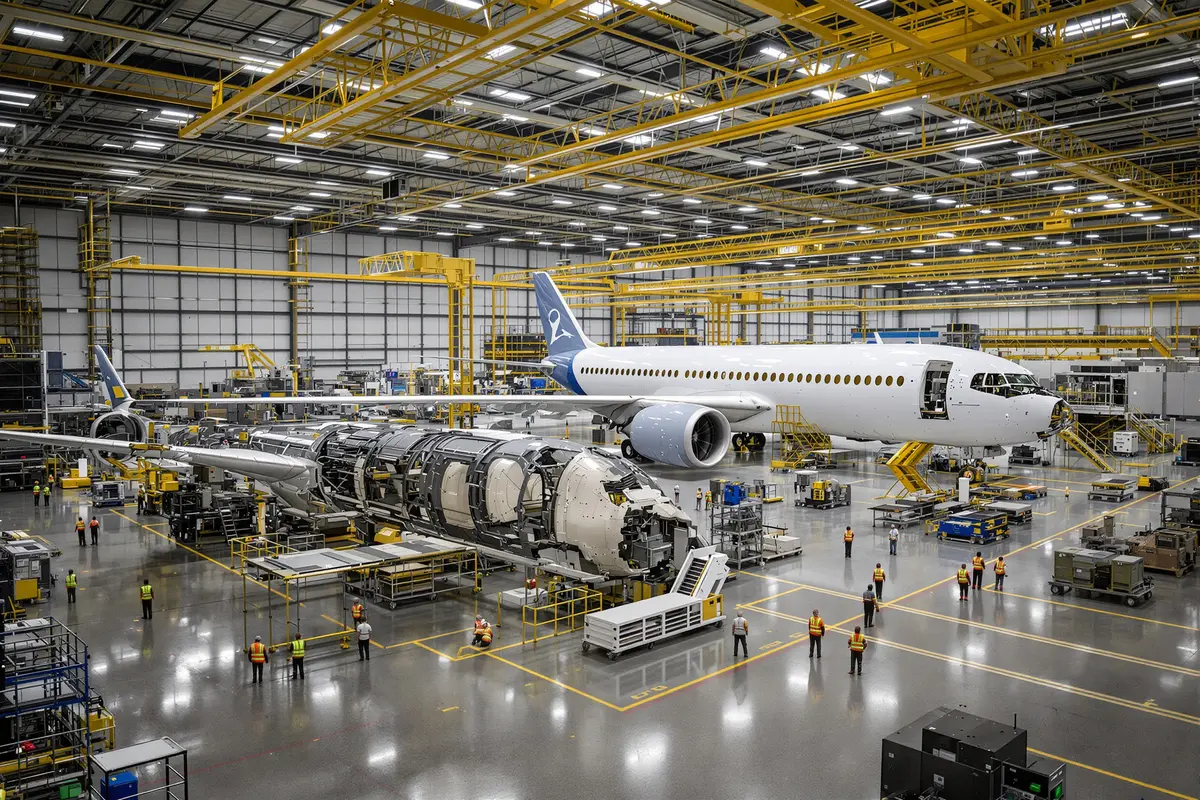
From the outside, it looks like a hazy giant—more like a city than a building. But step through the doors of Boeing’s Everett plant in Washington, and you’re stepping into the heart of jet-making history. This is where 30,000 people work to build the world’s most advanced planes, and where up to eight wide-body jets can be assembled at once.
Meet the world’s largest airplane factory
The Boeing Everett factory is more than just large—it’s the largest building in the world by volume. Sitting just north of Seattle, it spreads across nearly 100 acres of space. In some spots, you literally can’t see the far wall. It’s so massive that it’s said weather patterns can form inside the building.
Jet fuel mixes with damp morning air as workers arrive by car, bus, bike—any way they can. It’s like clockwork. Every week, around 30,000 people walk through its doors. Each one plays a small but critical part in creating a machine built to fly across continents.
How eight jumbo jets get built at once
Inside the hangar, things don’t move fast—they move with precision. The jet production process is broken into zones and positions, like an extremely advanced assembly line. One end starts with large fuselage barrels. From there, wings are attached, tails mounted, engines fitted, and cabin interiors installed.
On a good day, you might see eight wide-body jets in different stages of life: some bare metal, others nearly ready to fly. Each one crawls through the factory floor, growing more complete step by step. It’s a quiet symphony of teamwork, patience, and technical detail.
What it’s really like to work there
The Everett factory may be huge, but it runs on human connection. Talk to one worker and you get a story. Maria’s wired electrical systems inside planes for over 20 years. A missed cable? That could mean delivery delays for airlines waiting halfway across the globe.
Everyone’s got a ritual. Morning coffee. The best locker spot. Which elevator’s fastest. Even little islands of personalization—tool benches stickered with family photos and reminders—help make this steel city feel livable.
From teamwork to takeoff
What makes Everett work isn’t just technology—it’s the people behind it. Mechanics, engineers, safety checkers, and thousands of others work around the clock. Shifts rotate so production never stops. One delayed part can throw everything off balance, so every step is carefully timed and tracked.
The scale is astonishing, but the pride is personal. Many employees talk about watching “their” plane take off for the first time. Some even track tail numbers online just to see where their work is flying next—Frankfurt, Doha, Singapore. That jet that carried you on your vacation? Someone stayed late one night to finish wiring its lights.
Pressure meets passion under one roof
Building airplanes isn’t easy. There’s pressure to stay on schedule, keep safety perfect, and roll out each aircraft on time. Mistakes happen. Tempers run thin. Engineers sometimes crawl inside planes with laptops and flashlights, solving problems up close.
Through it all, there’s a simple rule that holds: there’s no room for “good enough.” When people step onto these jets with their families, they trust that every bolt, panel, and cable is just right.
Why it matters to the rest of us
Most of us don’t think twice about the planes we board. But every long-haul flight owes its existence to factories like Everett. When you fly across oceans or continents, you’re inside a machine pieced together by thousands of strangers working in harmony.
Think of Everett like a giant clock—visible only if you zoom out far enough. But instead of ticking seconds, it produces connection. Business trips, family reunions, vacations—they all begin here.
A glimpse into the future
Factories like Everett stand as symbols of old-school belief: that with enough steel, skill, and teamwork, humans can make machines strong enough to leave the Earth. Some worry this model is fading, replaced by smaller, automated plants. Others say the future is already here, with new materials and digital interfaces helping Everett evolve.
Whatever happens next, this place remains a reminder of what we can make together. It’s more than an engineering triumph—it’s a message. That even today, with all our challenges, thousands of people still show up and build something meant to fly.
Fast facts about the Everett factory
- Location: Everett, Washington, USA
- Aircraft built: 747 (past), 767, 777, 787 Dreamliner
- Workers: Over 30,000 employees
- Building size: Nearly 100 acres—world’s largest by volume
- Jets assembled at once: Up to 8 wide-body airplanes
- Tour availability: Yes, through Boeing’s Future of Flight center (when operational)
- Build time per jet: Several months from first part to rollout
Next time you fly…
…remember the army of experts behind your ride. That plane wasn’t just built—it was believed in, inspected, tested, and finally delivered by people who will likely never ride it themselves. It’s not just a job. It’s a sky-bound responsibility. And it starts, quietly, in the world’s biggest building.