
Imagine a hidden world silently buried under miles of ice, untouched for over 30 million years. Sounds like science fiction? It’s not. Deep beneath Antarctica, scientists have uncovered evidence of a lush, ancient environment locked away beneath more than 2 kilometers of ice. This discovery is not just fascinating—it’s reshaping how we understand Earth’s past, and maybe even its future.
How Did Scientists Discover This Lost World?
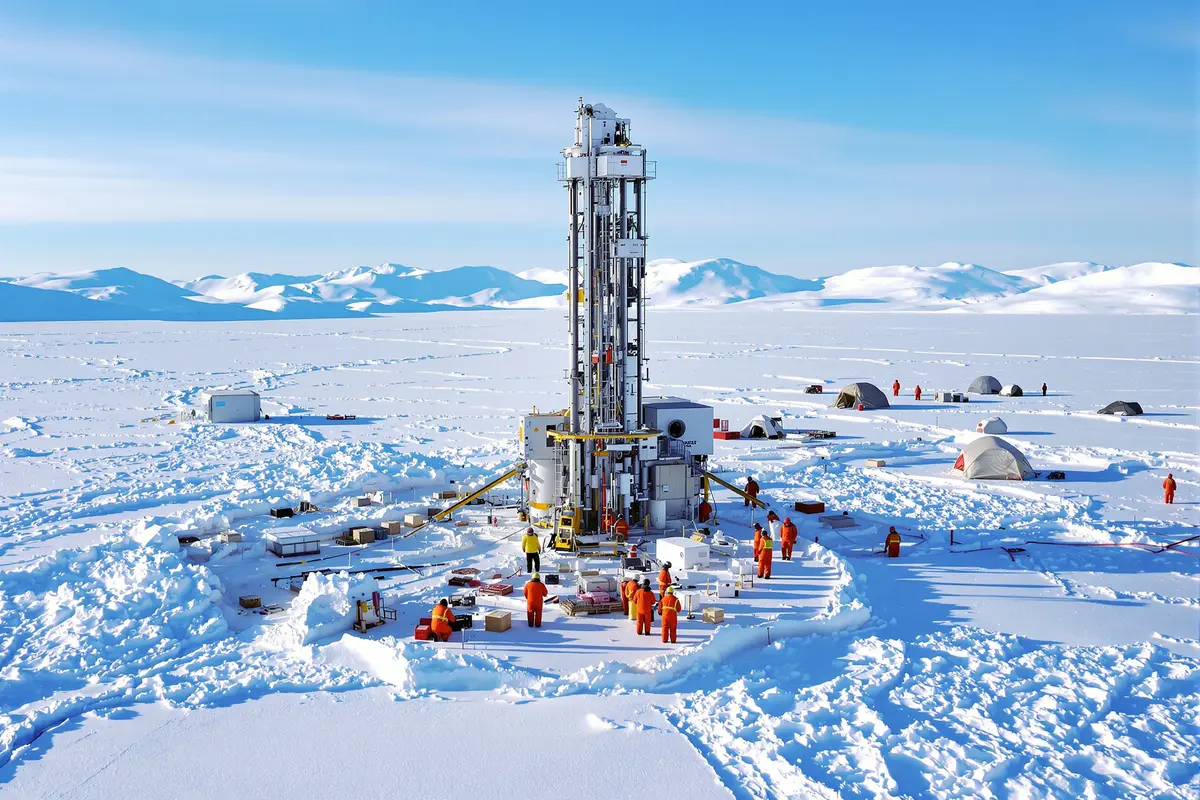
It all started near the East Antarctic Ice Sheet. Researchers were drilling nearly two kilometers (1.2 miles) down into the ice when they hit something unexpected—a distinct layer of sediment sandwiched between the massive ice and the rocky surface below.
Using advanced imaging and chemical analysis, the team realized that this sediment wasn’t just old dirt. It held tiny traces of life, clues suggesting that a vibrant ecosystem once existed there, before being sealed in for tens of millions of years.
This isn’t just another icy find. The samples are believed to be from a time known as the Eocene Epoch, roughly 34 million years ago. That’s when Earth was much warmer, and Antarctica was free of ice, covered in plants and forests.
What Was Antarctica Like 34 Million Years Ago?
Believe it or not, Antarctica wasn’t always a frozen desert. Back in the late Eocene, it was likely a rainforest-like environment with warm temperatures and lots of rainfall. Based on plant fossils and sediment data:
- The region had dense vegetation, including mosses and ferns
- There was likely life in the form of tiny organisms, maybe even insects
- Temperatures might have been similar to those in today’s temperate forests
That’s a far cry from the icy landscape we know today. The transition from a green Antarctica to a frozen one happened surprisingly quickly, geologically speaking.
Why This Discovery Matters Today
This ancient ecosystem gives scientists a rare window into what Earth looked like when it was much warmer. That’s especially important now, as our planet heats up again due to climate change.
These layers buried under the ice act like a time capsule. They tell us:
- How fast Earth’s climate can flip from hot to cold
- What kind of life existed before the deep freeze
- How CO2 levels affected global temperatures in the past
One key takeaway? The Earth’s climate system can shift quickly and dramatically. Understanding that shift could be crucial for predicting how our world might change in the coming decades.
What Tools Did Scientists Use?
To access this untouched world, researchers used a combination of ice-core drilling, seismic imaging, and sediment analysis. Here’s a snapshot of their high-tech toolbox:
- Ice core drills to reach deep into the ice layers
- Seismic sensors to map underground features
- Microscopic analysis of organic material in sediment
These tools allowed them to pick up microscopic pollen, spores, and fragments of plants. Each particle was a story, revealing clues about ancient temperatures, moisture, and biological life.
Could There Be Other Lost Worlds Beneath the Ice?
Absolutely. The Antarctic continent is vast, and much of what lies beneath remains a mystery. Scientists believe there may be more ancient landscapes sealed under the ice, waiting to be discovered.
Some areas could reveal even older ecosystems, or perhaps even ancient lakes and life forms that adapted to extreme isolation. It’s a thrilling frontier, full of untapped knowledge.
Unlocking the Past to Protect the Future
Discoveries like this aren’t just about looking backward. They help us better understand how our world responds to big changes—like rising temperatures or shifting carbon levels. That knowledge can guide how we respond to today’s environmental challenges.
So while this lost world may be long gone, its secrets are helping scientists piece together one of the most important puzzles facing humanity: our changing climate.
And if there’s one thing this ancient story beneath the ice tells us, it’s that Earth is capable of dramatic transformations. The good news? We’re finally learning how to read the signs.