
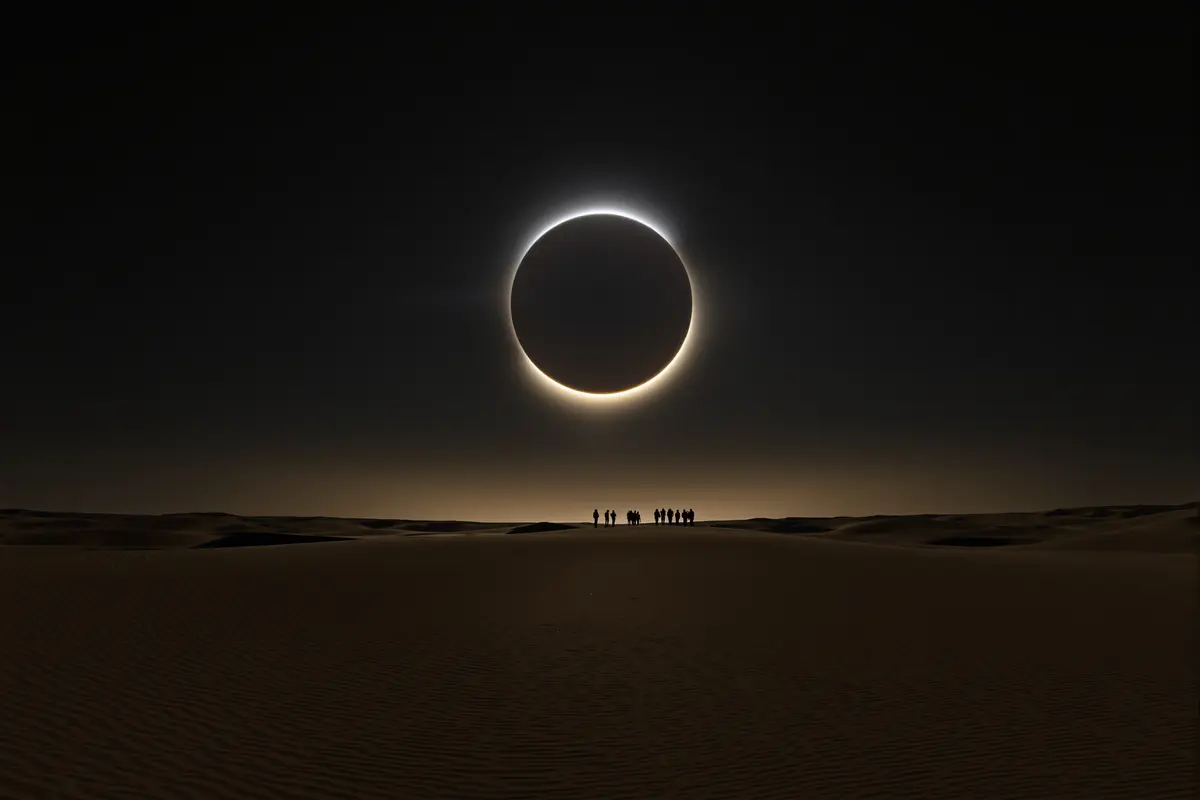
Mark your calendar. An experience like no other is coming—and it’s set to plunge parts of the world into stunning darkness. The century’s longest total solar eclipse finally has an official date, and if you’ve never seen day turn into night in real time, this is your chance.
When is the century’s longest solar eclipse?
The big date is August 2, 2027. On that day, the Moon will sweep across the face of the Sun, casting a dramatic shadow across our planet. For some lucky spots on Earth, the eclipse will last up to 6 minutes and 23 seconds—the longest totality we’ll witness until the year 2114.
Where will it be visible?
Not everyone will see the eclipse the same way. The best viewing will stretch across parts of North Africa, Southern Europe, and parts of the Middle East. Some countries in the perfect path include:
- Morocco
- Algeria
- Egypt
- Saudi Arabia
- Sudan
- Yemen
- Western parts of Oman
In these areas, people will experience full darkness during the eclipse. Other regions, including Southern Europe and parts of Central Africa, will see a partial eclipse, where the Moon covers only part of the Sun.
What makes this eclipse so special?
Solar eclipses aren’t rare, but one this long is a true cosmic marvel. On average, totality lasts just 2–3 minutes. This time, we’re getting more than double that. Why so long?
It all comes down to timing and position. The Moon will be closer to Earth than usual, appearing slightly larger in the sky. Also, the Earth’s rotation and the Moon’s orbit will line up in just the right way to stretch the duration of totality.
How to safely watch the eclipse
Staring directly at the sun without protection is extremely dangerous. To view the eclipse safely, you’ll need one of the following:
- Certified eclipse glasses with ISO 12312-2 protection
- Solar filters for telescopes, binoculars, or cameras
- A pinhole projector for indirect viewing
Never try to look at the eclipse through regular sunglasses, a phone camera, or unfiltered lenses. These won’t protect your eyes from the Sun’s powerful rays.
Planning a trip for totality? Start now
Eclipse chasers, take note: travel to the eclipse’s path means clearer skies and a chance to see full darkness at noon. But accommodations and flights will book fast, especially in popular viewing countries like Egypt and Saudi Arabia. If you’re dreaming of being in the eclipse’s path, it’s smart to start planning early.
Look for areas with predictable dry weather in August and try to stay mobile in case of cloud cover. And don’t forget: even a few hundred kilometers can mean the difference between a partial view and the unforgettable total eclipse.
Tips to make the most of the moment
- Set multiple alarms—eclipses move quickly, and the full eclipse may last just over 6 minutes in the best spots.
- Bring a tripod or phone mount if you’re capturing the event on video or photo. Keep your hands free to soak in the atmosphere.
- Download an eclipse tracker app to stay updated on timing and positioning depending on your location.
This is not just about the science—it’s about the feeling. A total solar eclipse can be eerie, moving, even tear-inducing. Birds stop chirping. Temperatures drop. The world changes, if only for a moment.
Can you see it from the U.S.?
Unfortunately, no. The 2027 eclipse will not be visible in North or South America. If you live in the U.S. and want to witness a similar eclipse closer to home, you’ll need to wait for April 8, 2024, when North America experiences its own total eclipse.
This is your cosmic invitation
Sky events this rare don’t happen often, and they’ve stunned humans for thousands of years. So whether you’re a stargazer, a traveler, or simply someone who wants to witness the extraordinary, the solar eclipse of August 2, 2027 is your chance.
Don’t miss it—this cosmic shadow won’t cross our skies again for another century.