The Dutch didn’t just build dikes and dams. They moved entire rivers. For over a decade, this small European country has taken on one of the riskiest challenges imaginable—redrawing its own coastline. But the result? A man-made miracle hidden in plain sight, reshaping not just the land but how we think about water itself.
The country that told the sea to move over
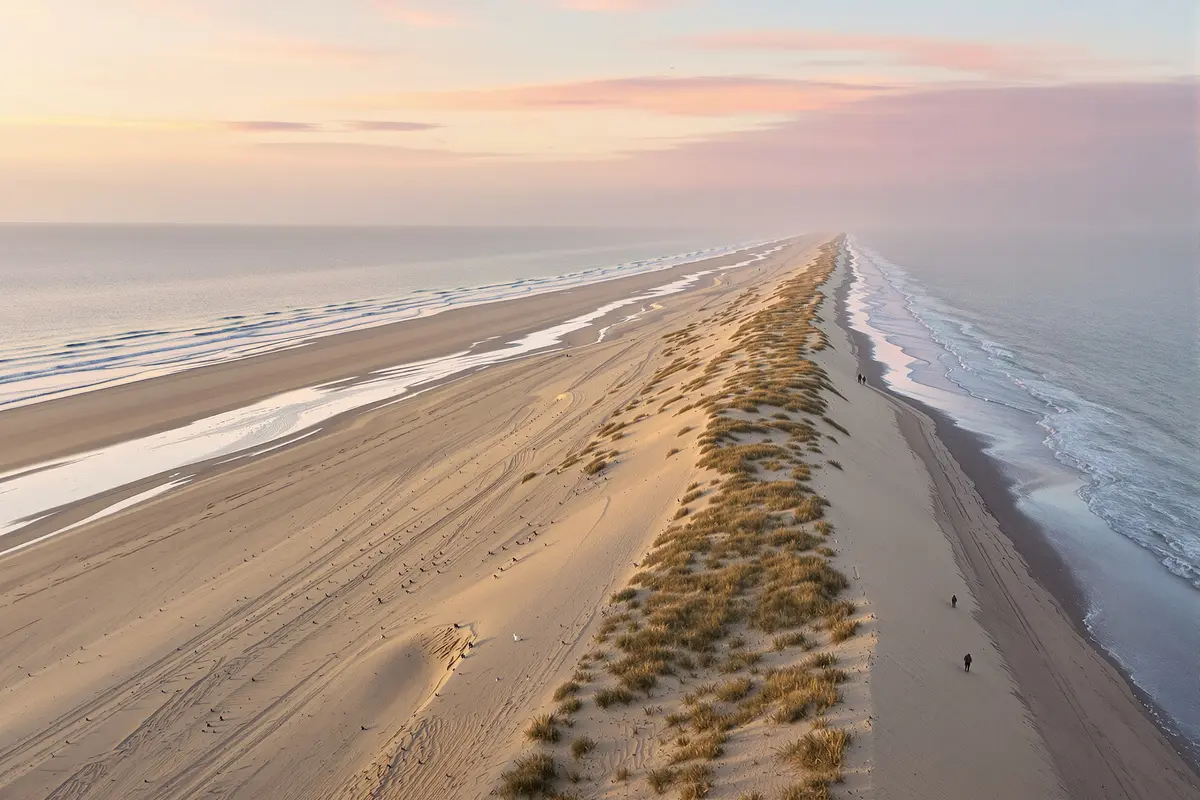
Stand on the edge of the Netherlands and it might look like a regular beach: kids flying kites, surfers in the water, families walking the coast. But what you’re actually seeing is an engineered shoreline, planned with precision and patience.
The Dutch approach isn’t about fighting rising waters with brute force. It’s about guiding nature’s power—nudging rivers, shifting coastlines, and adding sand in just the right places. Instead of building ever-taller walls, they asked a radical question: What if we work with the water instead?
Meet the Sand Motor: a beach that builds itself
Back in 2011, Dutch engineers tried something bold. They dumped 21 million cubic meters of sand along the coast near The Hague—not to form a beach immediately, but to let natural forces like wind and waves spread it gradually over time.
The result was called the Sand Motor: a giant, artificial peninsula that grows and shifts bit by bit. Over the years, that sand has built up new dunes and beaches in the exact places where they’re needed. No endless concrete. No heavy machinery. Just physics, patience, and a lot of smart planning.
Redirecting rivers without breaking nature
The Netherlands didn’t stop at beaches. They went upstream, too. By carefully adjusting where the Rhine and Meuse rivers flow out to the sea, they’ve changed how sand and silt travel along the coast. And here’s the trick: small changes with big effects.
- Opening side channels allows water to branch gently instead of crashing down one narrow path.
- Lowering riverbanks in key spots creates areas where floodwaters can spread safely.
- Controlled inlets help direct how sediment moves and where it lands.
This idea—often called “Room for the River”—turns rivers from wild threats into partners. It’s not about building higher dikes. It’s about giving water safe places to go before it becomes dangerous.
A coastline made from patience, not panic
This work doesn’t grab headlines. It can take 10, 20, even 30 years to see big results. But over time, something amazing happens: The coast changes shape. New land appears. Beaches widen. Dunes thicken.
From space, the Dutch coast looks like it’s alive—curving, smoothing, growing. But none of this is random. Every curve and corner is the product of decades of experiments, meetings, computer models, and yes—plenty of mud. It’s deliberate. And it’s still going.
Lessons for a warmer, wetter world
As climate change brings bigger storms and higher seas, many countries are racing to build massive sea walls. But the Dutch have learned the hard way: hard defenses don’t always work. They can block water, sure—but they also block rivers, ruin ecosystems, and eventually fail.
The new Dutch model is different. It mixes safety with flexibility by using ideas like:
- Investing in softer defenses like sand dunes that can grow with time.
- Letting low-lying land flood deliberately, in a controlled way, instead of risking sudden disaster.
- Designing dikes with built-in nature zones, so plants help reinforce the walls over time.
This isn’t science fiction. It’s happening—today. Children in parts of the Netherlands now grow up thinking it’s normal to ride their bikes across lands that used to be sea.
Can other countries copy this?
They can, in part. You can’t clone the Dutch system overnight, and every coastline is different. But you can borrow the mindset:
- Work with nature, not against it.
- Think long-term—it takes decades, not months.
- Don’t just ask “how do we block the sea?”—ask “where can the water safely go?”
This way of thinking won’t just defend us from rising seas. It might just reshape our relationship with the planet.
The true legacy: a different way to think about land and sea
Standing on brand-new ground in places like Flevoland—land that didn’t exist a century ago—it’s easy to forget this isn’t normal. Supermarkets, schools, and fields of tulips thrive below sea level. But behind that quiet scene is years of planning, compromise, and creativity.
The real miracle isn’t engineering. It’s imagination and persistence. And maybe that’s the best lesson of all: the future coastline isn’t fixed. With the right choices, it can move—not only safely, but beautifully.