
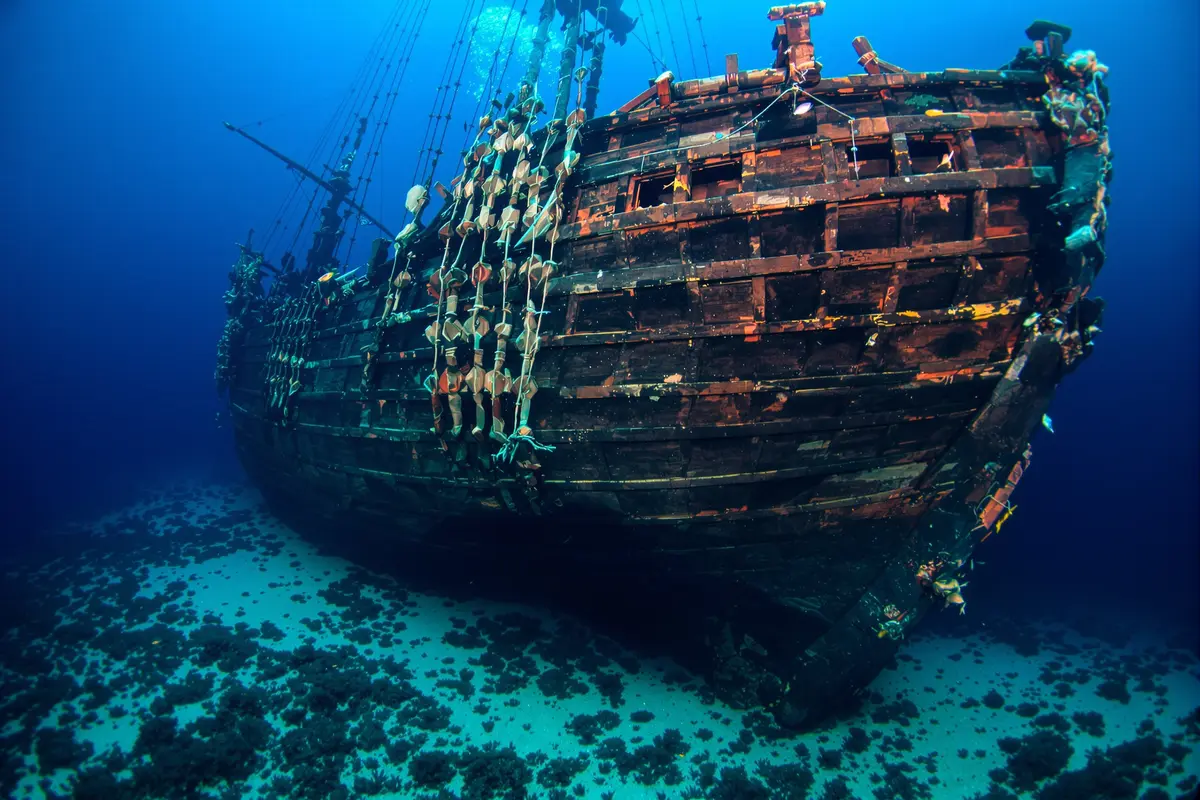
Imagine diving deep into the ocean and suddenly seeing a ship resting on the seabed, so perfectly preserved it looks like it could sail again. That’s what happened when researchers recently discovered a 250-year-old shipwreck lying nearly untouched beneath the waves. But now comes a tough question—should we leave it there in peace, or turn it into a tourist attraction?
A Rare Time Capsule Beneath the Sea
This isn’t just any old wreck. It’s what archaeologists call a “time capsule site.” The ship rests upright on the ocean floor. Its wooden frame is dark but intact, with no major damage, no coral growth, and even ropes and tools still in place. Thanks to cold, low-oxygen water, the wreck avoided rot and decay for over two centuries.
It’s the kind of discovery that thrills scientists and treasure hunters alike. Like Sweden’s famous warship Vasa—which was recovered in near-whole form—this ship offers a window into the past that textbooks can’t match.
Two Very Different Visions
When something this rare is found, it usually triggers a debate. On one hand, scientists argue the ship should stay undisturbed, studied carefully using advanced tools like sonar and remote cameras. They say removing it launches a costly conservation project that risks destroying the wreck.
On the other, tourism advocates see dollar signs. They dream of underwater theme parks, VR exhibits, glass tunnels, and high-end dive tours. Their pitch? People need to experience history up close to care about it.
Both sides have a point. But we can’t ignore the risks of moving too fast or going too big.
The Dangers of Turning it into a Tourist Attraction
Let’s face it—tourism isn’t always gentle. One wrong fin kick from a diver can stir up sediment that’s settled for centuries. Anchors can crash into fragile rails. Even light, sound, or temperature changes can speed up decay.
This is why experts caution against rushing in. The moment you bring a ship into sunlight and air, conservation becomes a race against time. If funds run out or careless handling occurs, what took centuries to protect can vanish in months.
Preserve It Digitally, Share It Globally
What if you could explore the ship without ever touching it? That’s where 3D photogrammetry and laser scanning come in. Scientists can now create detailed digital twins so precise, you can spot nail heads from your screen.
- VR experiences and museum holograms transport visitors into the wreck without harming it.
- School children and curious travelers can explore the site from anywhere in the world.
- The real ship stays safe, slowly aging in deep water, while its story reaches far beyond the sea.
This approach gives us the best of both worlds: access and protection.
Sometimes, the Best Move is to Leave It Be
One maritime archaeologist put it best: “The sea has been their museum longer than we have.” Before launching dive tours and gift shops, we need to ask hard questions:
- Is the ship physically stable? Can it even survive being lifted?
- What marine life depends on it? Has it become a reef or nursery?
- Who lived—and possibly died—on that ship? Could it be a grave worth respecting?
- What’s the true story we want to tell? Is this about cannon battles, or something deeper like migration, trade, or slavery routes?
- Can we maintain it for decades, not just one grand opening?
Without clear answers, pulling up the wreck becomes more about profit than preservation.
Responsible Tourism Isn’t Always Hands-On
You don’t have to dive 200 feet or climb onto a ship’s deck to connect with history. You can explore these treasures through:
- Documentaries and VR simulations
- Maritime museums working with real archaeologists
- Digital exhibits and 3D tours made from real scans
When you support these methods, you send a clear message: you value access without destruction. You’re helping protect the story, not just chase the thrill.
A Mirror Beneath the Waves
This 250-year-old ship isn’t just a wreck. It’s a mirror reflecting how we treat the past when there’s money at stake. Some people want it lifted high in the spotlight. Others believe it belongs in silence under the sea.
Both want to honor history. But maybe the real lesson is this—not every treasure has to be touched to be shared. With the right tools and mindset, we can tell its story without tearing it apart.