
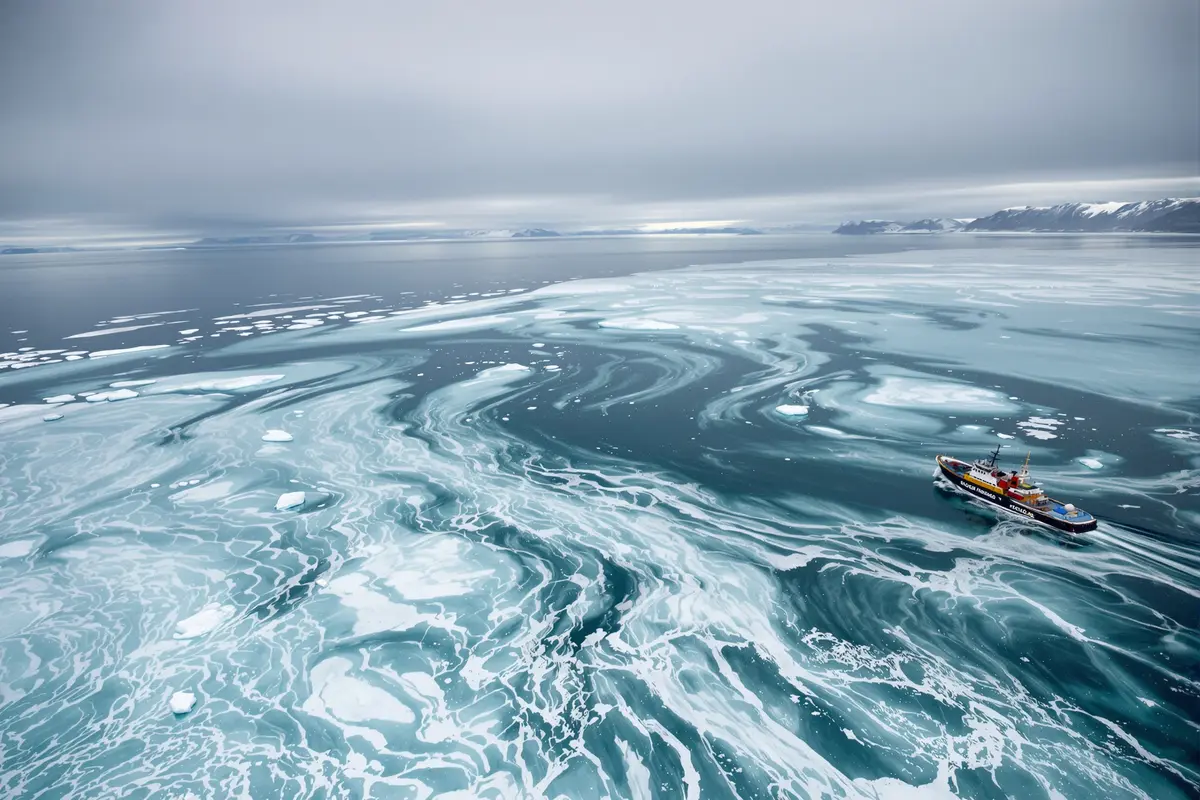
It’s something scientists hoped they’d never see in their lifetime. For the first time ever, a major ocean current has reversed direction—a chilling signal that our climate system may be sliding into uncharted waters. Crisscrossing oceans for thousands of years, these currents regulate weather, support marine life, and even help keep our air breathable. What happens when one suddenly spins the other way? The consequences could ripple far beyond the sea.
What exactly reversed—and why it matters
The current in question is part of what’s known as the Atlantic Meridional Overturning Circulation (AMOC). It’s a vital conveyor belt of ocean water that moves heat from the tropics to the North Atlantic, helping to moderate temperatures in Europe and North America. Scientists have now confirmed that a key section of this system has experienced a full reversal in flow direction—something never before observed in human records.
This isn’t just water changing course. It’s like flipping the engine rotation in a massive machine that drives our planet’s climate.
Why this reversal happened
The primary cause? Climate change, fueled by rising temperatures and melting ice. As Greenland’s glaciers pour fresh water into the ocean, it disrupts the delicate balance of salt and heat that powers these currents. When too much fresh water enters the system, the water becomes less dense and stops sinking—a crucial part of how the current flows. In this case, it may have not only slowed, but actually reversed.
Think of it like a giant escalator in the ocean. Fresh water piles up at the top, clogging the gears, until the whole thing jerks to a stop—and then starts operating in the wrong direction.
The ripple effects across the planet
This reversal isn’t an isolated event. It could trigger a cascade of changes around the world:
- More extreme weather: Without warm water flowing north, winters in Europe could become colder and storms more intense.
- Struggling marine ecosystems: Many fish and coral communities rely on current flow to bring in nutrients and oxygen-rich water.
- Rising sea levels on U.S. East Coast: A weakened or reversed current causes water to back up along the Atlantic shoreline, raising sea levels faster than expected.
- More droughts in Africa and Latin America: Changes in heat distribution affect rainfall patterns, making dry regions even drier.
These aren’t distant, future hypotheticals. Some of these effects are already being observed—and may worsen if the system doesn’t self-correct.
What scientists are doing now
The data came from deep-ocean observation stations and satellite measurements that monitor water temperature, salinity and flow speed. Oceanographers are now scrambling to verify how far-reaching this reversal might be. Is it a localized, temporary blip—or the beginning of a larger breakdown?
Many are urgently calling for more funding to expand monitoring networks. The current collapse could take place slowly or all at once. Early detection is the only way to prepare.
Can we still stop worse outcomes?
It may not be too late—but time is running short. Scientists agree on a few key actions:
- Reduce greenhouse gas emissions: The more the planet warms, the worse the disruption becomes.
- Protect ice sheets: Reducing emissions slows the melt of Greenland and Antarctic glaciers, keeping salinity levels in check.
- Invest in early warning systems: This allows cities to brace for flooding, drought, or crop failure in advance.
Individual efforts matter, but coordinated global cooperation is critical to change the tide.
A landmark moment—and a warning
No one alive has seen this current reverse before. That makes this more than a surprising weather event—it’s a climate milestone. Some call it a “tipping point.” Others say it’s simply proof that Earth’s systems are closer to the edge than many believed.
What’s clear is that the planet is reacting—urgently and dramatically—to years of imbalance. This reversal is a wake-up call. The question is: will we listen in time?